The challenge
Angleton has a genuine case to make. It sits within reach of Houston, the Port of Freeport, the Union Pacific line and two airports, with chemical manufacturing, heavy civil engineering construction and hospitality driving its economy. Housing is affordable and the schools are good.
The difficulty is that every community in the region says something similar, and a site selector doing early research gives a website one to three minutes before deciding whether it’s worth more. Prose alone doesn’t survive that. Neither does a page that asks a visitor to fill in a form before it tells them anything.
The approach
The city’s Economic Development page pairs each part of its pitch with a Localintel Dashboard, so a claim in the copy is immediately followed by the data behind it.
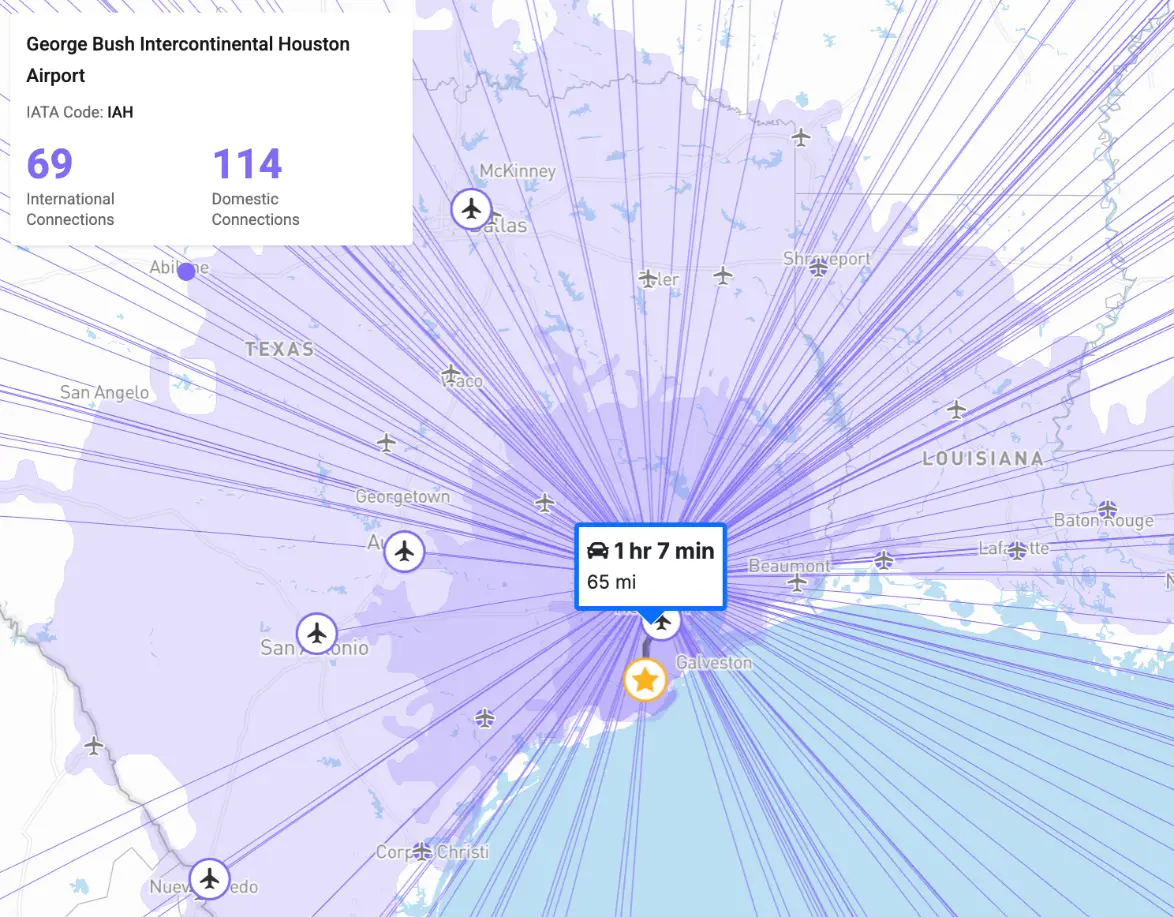
Logistics and Accessibility Advantages sits under the connectivity section, letting a visitor explore road, rail, air and port access for themselves. Quality of Life supports the affordability and lifestyle case. Community Profile backs the section on the local economy and job market. Market Advantages carries the consumer base and demand story. Search Commercial Properties lets a developer look at what’s actually available without contacting anyone.
Five dashboards, one page, no forms.
The result
Angleton makes its case in the format early-stage research actually uses. A visitor who wants the headline gets it from the copy. A visitor who wants to interrogate the numbers can do that on the same page, at their own pace, without a call.
The page has also aged well. Three of the five dashboards have moved to newer versions since the page went live, picking up better data and presentation without the city rebuilding anything or changing a line of embed code.
Three minutes is not long enough to explain a community. It is long enough to let one explain itself.